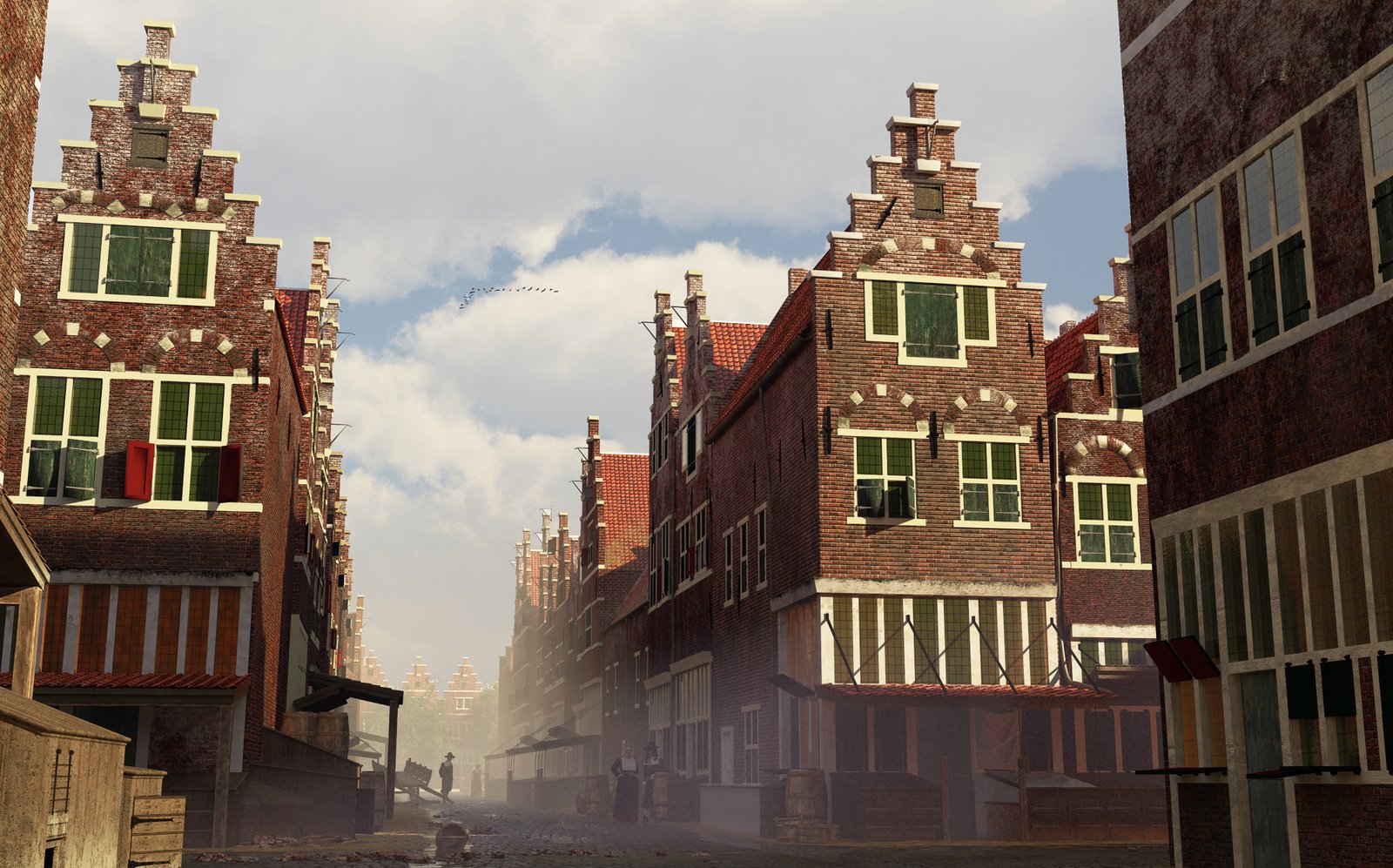
A collapse
Imagine losing the center of your world.
In 70 CE, the Romans destroyed the Second Temple in Jerusalem. For the Jewish people, this was not only the loss of a building — it was the loss of a political center, a religious focal point, and a unifying symbol.
Before that moment, Jewish identity had a place. A physical heart. A shared direction.
After it, Jewish communities were scattered across regions and empires. Suddenly, they were no longer a majority in their own land. Wherever they settled, they became minorities.
And that changed everything.
Life as a minority is not just a demographic fact — it is a constant negotiation. It forces difficult questions:
Are we part of the larger society, or separate from it?
How much can we adapt without losing ourselves?
Is survival possible without sovereignty?
Over centuries, Jewish communities answered these questions not with retreat, but with reinvention. Without a Temple, sacrifice gave way to prayer. Without political autonomy, law and learning became anchors. Text replaced territory as the portable center of identity.
And eventually, that long history of adaptation arrived in Amsterdam.
A City of Opportunity
By the 17th century, Amsterdam had become a refuge — especially for Sephardic Jews expelled from Spain and Portugal. Compared to much of Europe, the Dutch Republic offered unusual degrees of economic freedom and relative tolerance.
Here, Jewish life did not simply survive. It flourished.
On our walking tour through Amsterdam’s Jewish district, we begin with economic and intellectual life — from the diamond trade that shaped the city’s economy to towering figures like the philosopher Baruch Spinoza, film entrepreneur Abraham Tuschinski, and pioneering feminist Aletta Jacobs.
Their lives reveal something essential: Jewish history in Amsterdam was not isolated from the city’s development — it helped shape it.
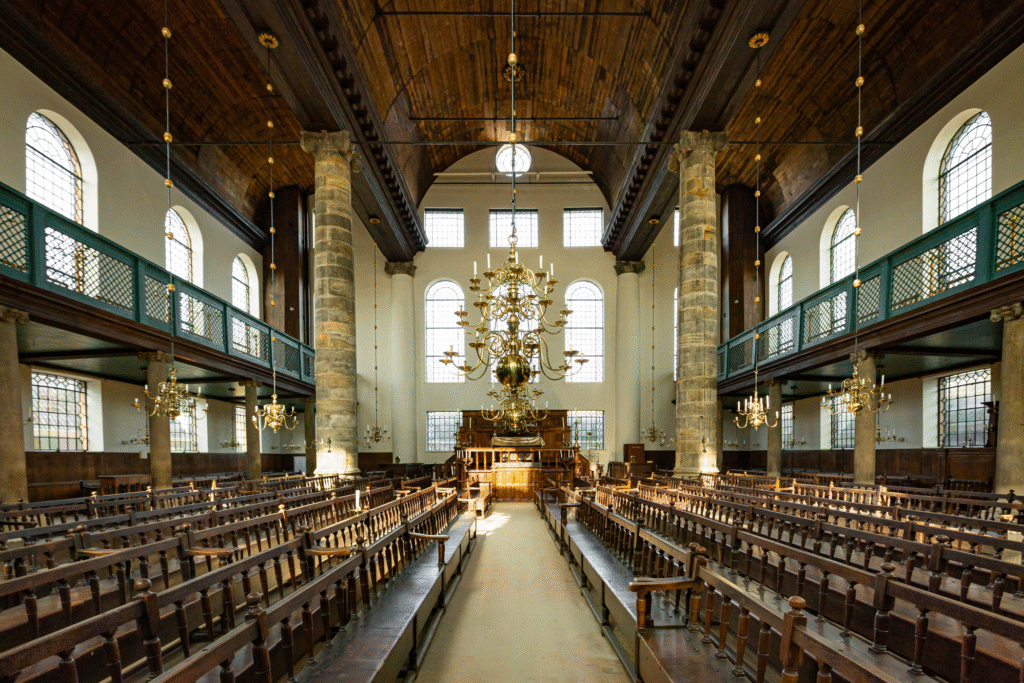
Inside the Portuguese Synagogue
One of the most powerful symbols of this flourishing is the magnificent Portuguese Synagogue.
Built in the 17th century, with its towering columns and sand-covered floor, it reflects both confidence and continuity. This was not a hidden community. It was a visible one — rooted in centuries of diaspora experience, yet building something stable in a new environment.
The synagogue tells a larger story: how a minority community, drawing on traditions formed after 70 CE, created institutions strong enough to sustain identity across generations.
The Fragility of Security
But minority life is rarely linear.
As we walk along Amsterdam’s canals, we confront the city’s darkest chapter. During World War II, the vast majority of Dutch Jews were deported and murdered.
At the Hollandsche Schouwburg — once a theater, later a deportation center — we stand in a place where thousands of Jewish children were separated from their families.
At the Monument to Jewish Resistance, we remember those who fought back.
At the National Holocaust Names Monument, inaugurated in 2021, the scale of loss becomes personal and visible.
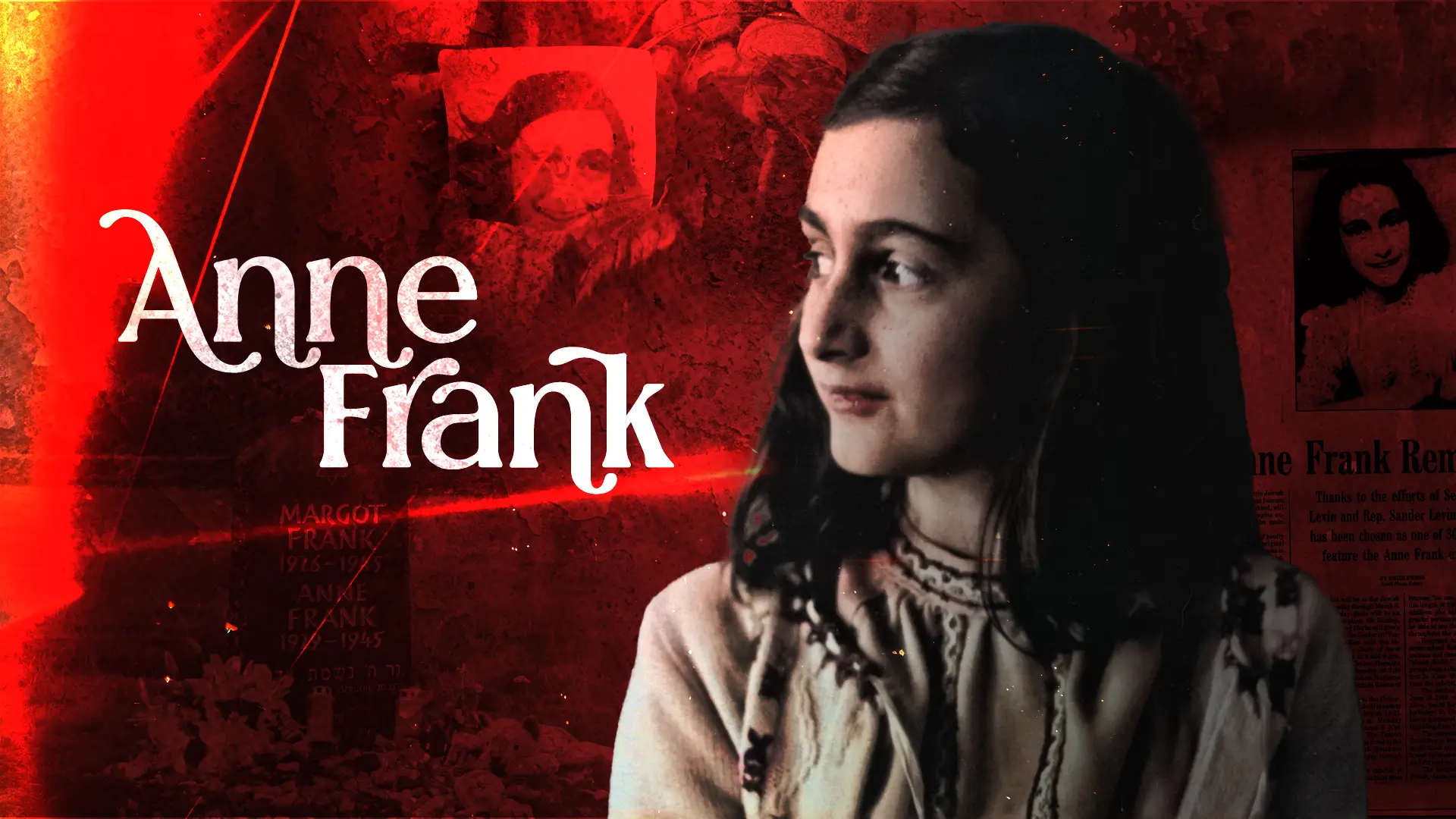
And although we cannot guide inside the Anne Frank House, the story of Anne Frank remains central to understanding Jewish Amsterdam — and the vulnerability of minority life even in societies once considered tolerant.
A Two-Thousand-Year Story
What makes Amsterdam’s Jewish Quarter so powerful is that it is not an isolated history. It is one chapter in a much longer narrative that began with exile and reinvention after 70 CE.
When we walk these streets, we are not only learning about local monuments. We are witnessing the result of a two-thousand-year experiment:
Can a civilization survive without sovereignty?
For centuries, Jewish communities answered yes — through adaptation, education, economic participation, cultural contribution, and strong internal institutions.
Amsterdam shows both sides of that story: flourishing and fragility, integration and vulnerability, contribution and catastrophe.
By the end of the tour, what emerges is not simply a history of persecution or success. It is a deeper understanding of resilience — of how identity can endure across centuries, across borders, and even across devastation.
From Jerusalem to Amsterdam, the story is one of reinvention.
And it is still visible in the streets.